Pay in installments of $6.42 with
 ,
,
 and
and

Shipping Estimate
USA
- USA
- CAN
- USA
- CAN
Ships within 48 hours · Estimated delivery Jul 2 - Jul 7
 Promo Codes Available:
For Your Every Summer RSVP, with Code: SUMMER15
Description
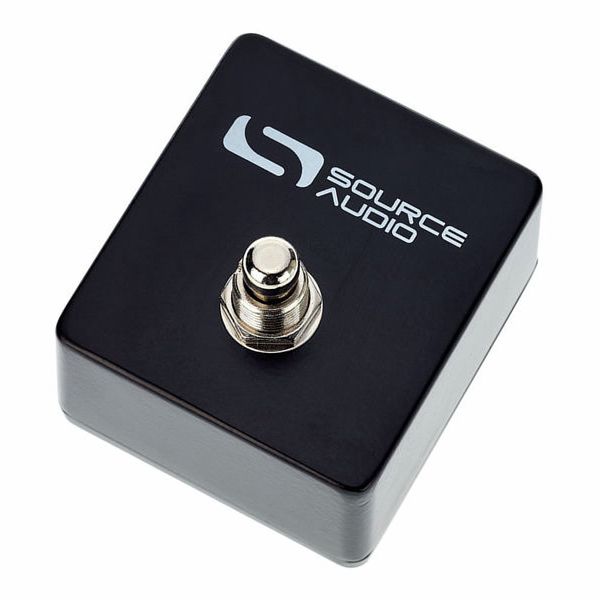
real spring reverb pedal Source Audio True Spring Reverb Pedal w/ Tap SwitchReverb+Tremolo The True Springs reverb effects are based on a mechanical design originated by the Hammond Organ Company in the late 1930s. This stark design uses a pair of input and output transducers to inject an instruments dry signal into an actual set of spring coils and capture the very distinct reverberations as the sound bounces back and forth within the springs. Of course, Leo Fender adopted this design in the 1960s with the some of his
Reverb+Tremolo
The True Spring’s reverb effects are based on a mechanical design originated by the Hammond Organ Company™ in the late 1930s. This stark design uses a pair of input and output transducers to inject an instrument’s dry signal into an actual set of spring coils and capture the very distinct reverberations as the sound bounces back and forth within the springs. Of course, Leo Fender adopted this design in the 1960s with the some of his "blackface" amplifiers and a revolution was born.
- Short Spring Reverb: Modeled after the unmistakable twang of "blackface" amplifiers of the 1960s. After extensive research we found tremendous diversity in the spring reverb sounds of a variety of amps. Some offered a tighter, less animated tone while others sounded “drippier,” with longer sustain and livelier reverb trails. The SHORT Spring reverb engine offers a taut sound with a quick decay and smooth trails.
- Long Spring Reverb: Produces long and deep reverb decays with noticeable “drip” and highly animated trails. The LONG Spring engine is not as dramatic as the TANK Reverb engine, but does offer an extremely authentic representation of some of the livelier reverb tanks found in vintage combo amps.
- Tank Spring Reverb (Outboard Spring): Captures the unmistakable effect of the tube driven outboard spring tanks of the 60s. The sound of reverb tanks like the classic Fender 6G15™ are characterized by their “drippy” attack and animated trail. This original two-spring design produces a bouncing, delay like sound inseparable from the early days of surf rock and spaghetti western soundtracks.
- Opto Tremolo: Optical tremolo (a.k.a. “Photocell Tremolo”) is the effect found in many combo amps of the 1960s. This version of tremolo relies upon a neon light bulb and a light dependent resistor called an "optocoupler." The non-symmetrical aspects of the light and the optocoupler give the tremolo a distinct choppy character.
- Harmonic Tremolo: This unique effect first appeared in Fender™ “brownface” amps made between 1959 and 1963, which alternately modulated the levels of bass and treble frequencies in the audio signal. The result is a very pleasing and complex tremolo that has characteristics reminiscent of a phaser.
- Bias Tremolo: This approach to tremolo involves using an LFO to modulate the bias voltage of the tubes in an amplifier. This essentially pushes the tubes in and out of saturation. The result is a smooth amplitude modulation with a mild overdrive created by the tube saturation.
Shipping Notes
- Free Standard Shipping on $100+ Orders to the USA.
- Except Preorder products are shipped in 48 hours.
- Delivery to the USA:
- Standard Shipping : 3-10 business days
- If time is of the essence, please consider selecting expedited delivery for faster service.
Exchange/Return Notes
- We offer a 30-day return/exchange service after receiving.
- Final sale items are not eligible for returns or exchanges.
- To process your return/exchange, please contact us at [email protected]
- Please click here for more details>>> Return & Exchange Policy
4.4 ★★★★★
Based on 702 reviews
Sort
Product Reviews
★★★★★ 4
Difficult to assemble, but a good basic divider
Color: Beige, Size: 22"- 4 Panel
I bought this to use as a background for when I have video calls. I wish I'd ordered the 6- or even 8-panel to block a little more, but that's my own error. It still covers a good portion of the room, so I'll make do, or maybe buy another at a later date to expand it.
It looks ok, if a little plain. The fabric panels have creases in them from being folded and will need to be steamed or ironed out for a nicer look. It would be easy to make your own panels as well, if you're so inclined.
The construction is decent. The frame is lightweight and if you don't angle the base supports the right way it may tip over if you extend it too far. The fabric panels aren't the highest quality, but are sturdy enough. They seem like they would handle being thrown in the wash well.
The only issue I have with it is that it was so difficult to put together. The push latches that connect the poles don't push it well and hurt my hands. The fabric panels are sized to be extremely taut, which makes it very difficult to get them on the bars without forcing the bar to bend slightly.
Overall, this is a good divider if you're looking for something simple and functional without being too worried about aesthetic. It's also a good, inexpensive base if you want to make your own custom panels.
WAS THIS REVIEW HELPFUL?YesReportShare
Reviewed in the United States on August 5, 2025
★★★★★ 5
Great Room divider
Color: Beige, Size: 34"- 3 Panel
Works well in separating my kids play area from my computer/office room. Easy to put together, height is perfect somewhat sturdy, looks great, light weight, not good if you are using it as a door, but if it is to stay in place than it is stable enough.
WAS THIS REVIEW HELPFUL?YesReportShare
Reviewed in the United States on September 3, 2025
★★★★★ 5
Exactly what I needed
Color: Black, Size: 34"- 3 Panel, Color: Black, Size: 34"- 3 Panel
It was easy to put together even without a power drill. Completely opaque. Only a very small slit between poles. I plan to add black electrical tape, but that's because I don't want nosies peeking through to see my screen. The height is beautiful. I was afraid it wouldn't be as tall as I needed. But it is perfect.
I share a small office with a good buddy of mine. People passing by our door is distracting and invites them to speak to me. I needed something that would stop the former and prevent the latter, especially when I'm deep in concentration mode. The two panels are enough to block outsiders and the third panel I will employ when I can't even be disturbed by my officemate. It's the fastest and easiest signal not to disrupt me at all. 10/10
WAS THIS REVIEW HELPFUL?YesReportShare
Reviewed in the United States on August 3, 2025
★★★★★ 3
Packaging contents
Color: Grey, Size: 34"- 3 Panel
Item is as described however this one appeared to be open and some parts possibly used. Example pole packaging mislabeled one had the letter K as a part there is no letter K item in the instructions. Another pole part had a taped on letter A which is completely different from the others thus indicating that it was opened or substituted. Finally after the partition was completely put together one of the bottom screw connection anchors came out making the partition unable to stand. I'm going to have to rig something up in order to get the anchor connected to the bottom panel. In closure the partion could be very acceptable and do the job if it was new and parts labeled correctly. I have pictures of all parts and packaging errors. Would buy again if new. I'm going to pursue some kind of compensation.
WAS THIS REVIEW HELPFUL?YesReportShare
Reviewed in the United States on March 15, 2026
★★★★★ 5
Great product
Color: Grey, Size: 34"- 6 Panel
This room divider is great. It was easy to put together. I was worried about it standing up right and not falling over. It stays up perfectly and is very easy to move and adjust to the shape I want it. Also, from one of the videos I watched it looked like the fabric was puckered in the panels. That is not the case at all. The fabric fits tightly in each panel for a nice smooth look. I would definitely recommend this and would buy again if needed.
WAS THIS REVIEW HELPFUL?YesReportShare
Reviewed in the United States on March 3, 2025